Into the Dark: A Journey Through the Ocean's Depth Zones
Most of our planet is deep ocean — and almost none of us will ever see it. Descend from the sparkling surface and the sea changes character every few hundred meters, until you reach a world of permanent night, crushing pressure and creatures that make their own light. This is a guided descent.
The sunlight zone: the thin bright lid
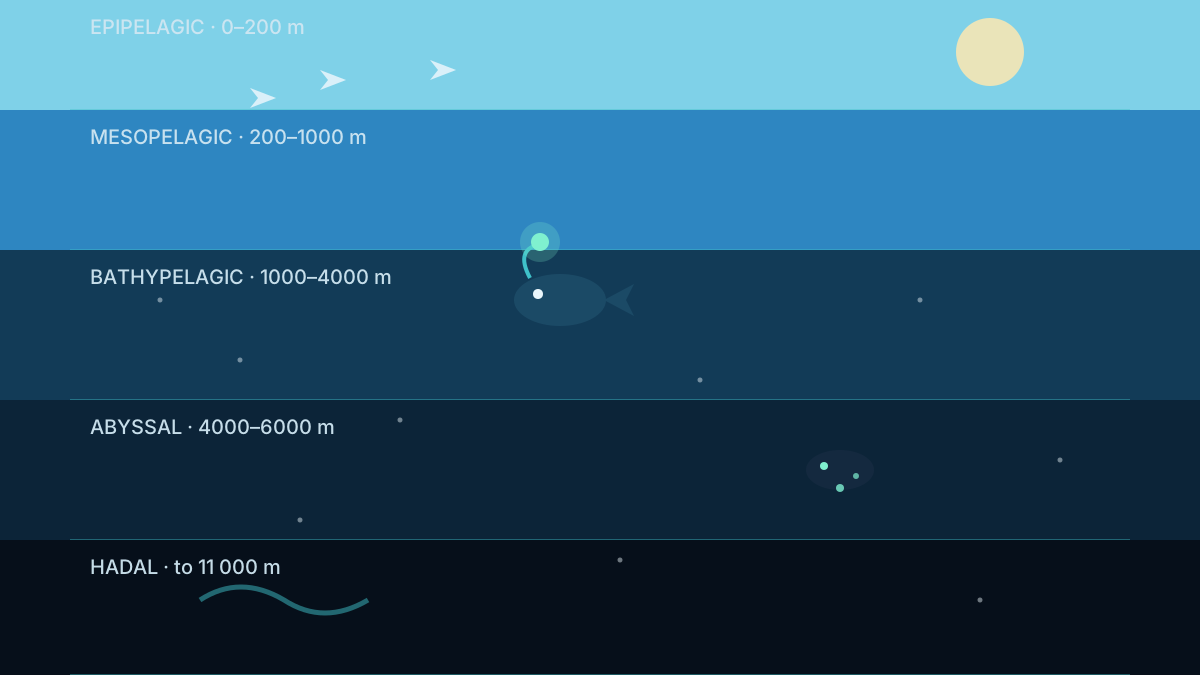
The top 200 meters — the epipelagic zone — is the ocean we know: warm, lit, and busy. Nearly all marine photosynthesis happens here, where drifting phytoplankton produce a large share of the oxygen in every breath you take. It looks like the whole ocean; it is barely the skin of it.
The twilight zone: the great in-between
From 200 to about 1,000 meters stretches the mesopelagic — the twilight zone, where light fades to a dim blue glow and then nothing. It hides staggering life: each night, billions of small fish and squid rise from here to feed near the surface and sink again at dawn — the largest animal migration on Earth, happening every single day, mostly unseen.
Midnight and below
Past 1,000 meters lies the bathypelagic — the midnight zone — then the abyssal plains around 4,000–6,000 meters, and finally the hadal trenches, plunging to nearly 11,000 meters in the Mariana Trench. Here the pressure would crumple a car, the temperature hovers near 4 °C, and food falls as a slow drizzle of particles from above, poetically named marine snow.
Life that makes its own light
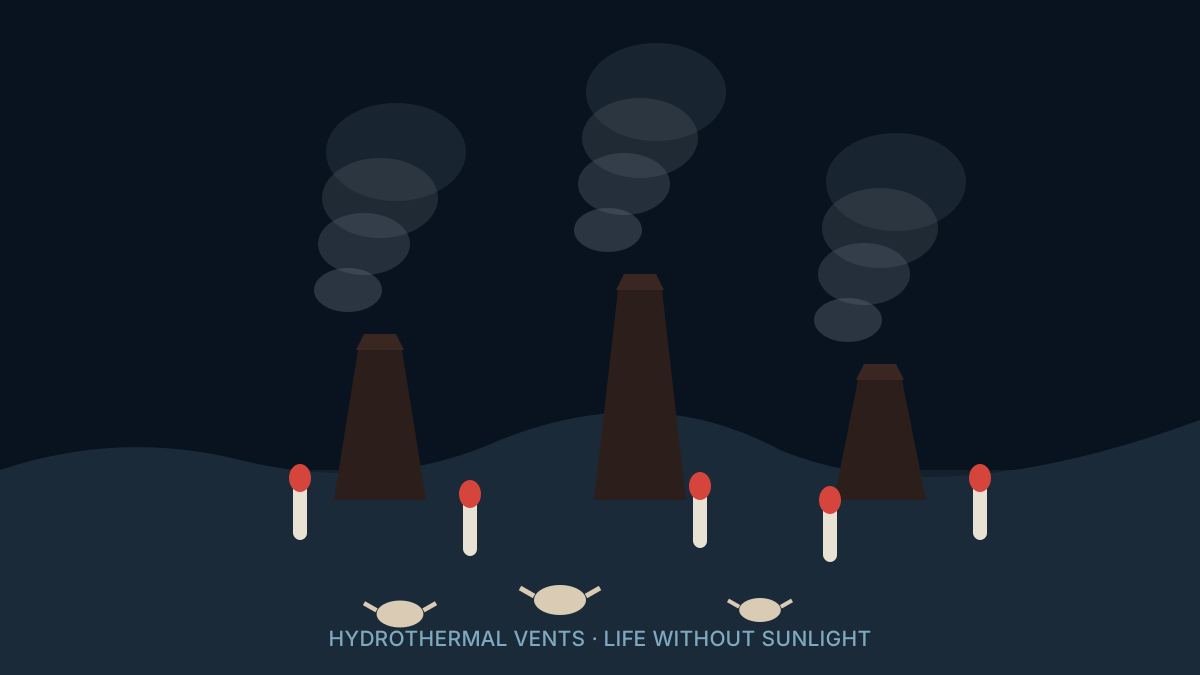
Darkness did not stop life; it redesigned it. Most deep-sea animals produce bioluminescence — chemical light used to lure prey (the anglerfish's glowing fishing rod), to vanish (counter-lit bellies erasing silhouettes), or to signal mates. At volcanic hydrothermal vents, whole ecosystems run without sunlight at all, feeding on chemicals from inside the Earth — a discovery that rewrote biology textbooks.
Why the deep matters to the surface
The deep sea stores carbon, recycles nutrients that feed the fisheries above, and holds species we have not yet named — by many estimates, most of them. It is also increasingly touched by human reach, from deep fishing to mining proposals, which is why scientists argue we should map and understand it before we change it. We have better maps of the Moon than of our own seafloor.
Conclusion
The deep ocean is not empty darkness; it is the planet's largest habitat, running quietly beneath every voyage and every forecast. Each descent finds something new — and the greatest discoveries of natural history may still be waiting below the twilight.
Frequently Asked Questions
How deep is the ocean?
On average about 3,700 meters. The deepest known point, the Challenger Deep in the Mariana Trench, reaches roughly 11,000 meters — deeper than Mount Everest is tall.
What is bioluminescence?
Light produced by living organisms through a chemical reaction. In the dark ocean it is the main form of communication, used to lure prey, confuse predators and find mates.
Is there life at the very bottom?
Yes — even the deepest trenches host life, from microbes to fish and crustaceans adapted to crushing pressure, darkness and scarce food.
Why is the deep sea cold and dark?
Sunlight is absorbed by water within a few hundred meters, so no light or solar heat reaches the depths; most of the deep ocean stays near 4 °C in permanent darkness.